
The Story’s Cargo Motif
The Most Precious of CargoesThis flow tracks the meaning of cargo as the story moves from imagined abundance to deported people, a rescued child, and a life carried forward.
increasing Bearing strength in each event
 decreasing
Bearing strength in each eventdecreasingCargo as Promise
Cargo as Promise
A word that warms
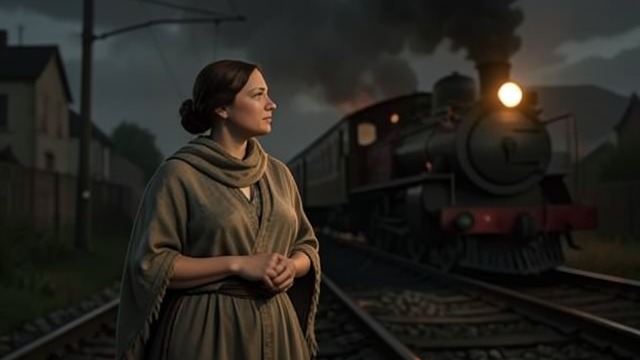
Poor Woodcutter’s Wife hears her husband describe the railway as a cargo train. To her, cargo suggests food, clothes, and abundance that might relieve hunger.
Hope before knowledge
She imagines wandering among goods in the wagons, unable to know that the train carries human beings. The word first expresses her need and limited view of the world around her.
People as Cargo
People as Cargo
Bureaucracy’s language
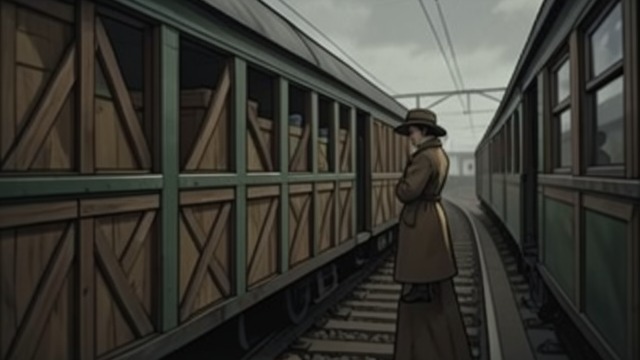
Convoy 49 carries deportees whom the occupying system treats as a load to be transported and sorted. The story repeats the language of cargo to expose that dehumanization.
A moral contradiction
The people in the wagons have names, families, and fears, even as official processes reduce them to numbers and categories. The story makes the cold term bear the weight of their erased humanity.
The Precious Child
The Precious Child
A package that cries
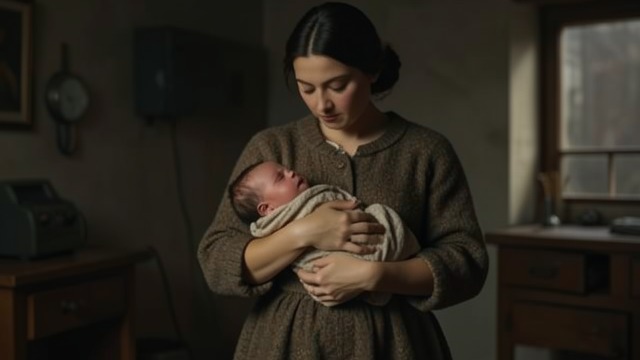
Poor Woodcutter’s Wife unwraps the bundle expecting a miraculous gift, then hears the hungry infant cry. The child’s need immediately defeats any purely symbolic idea of rescue.
A new meaning of value
The woman calls the baby her little cargo, but her care gives the phrase warmth and individuality. The child is precious not because she is an object but because she is loved.
A Life Carried Forward
A Life Carried Forward
Protection in motion
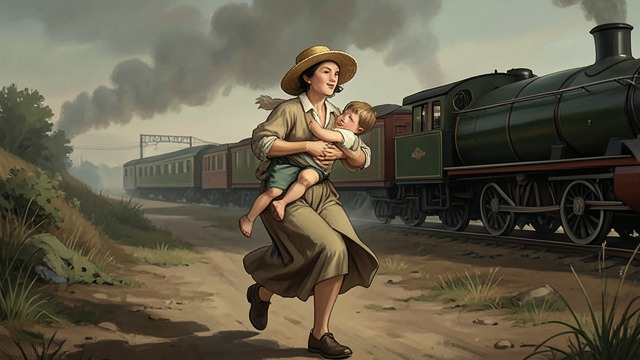
Poor Woodcutter’s Wife runs with the girl held to her chest. Later, she brings her along while selling goat cheese in the villages.
From transport to chosen journey
The girl has been involuntarily carried by a deportation train and then by rescuers. Her later movement through life is shaped by care and practical work rather than by the machinery that first named her cargo.
A Future Beyond the Train
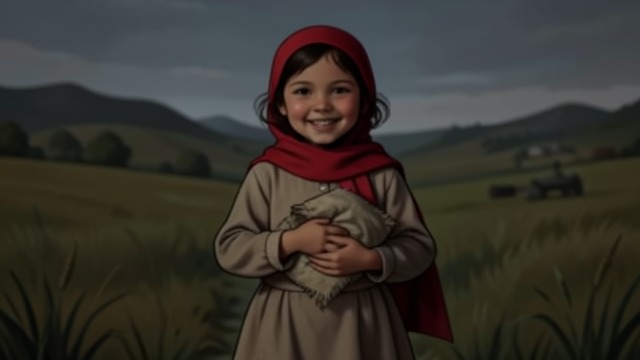
A Future Beyond the Train
A child with a public identity
The girl appears as a young pioneer in a magazine photograph, smiling in a red scarf. She has a life that is no longer defined only by the circumstances of her rescue.
The motif’s final tension
Her birth father recognizes her but does not claim her. The precious cargo has become a person with an established world, and that independence complicates the idea of rescue as a simple return to origin.
Early in the forest narrative
The deportation of Convoy 49
The morning Poor Woodcutter’s Wife finds the baby
After the family’s flight from the cabin
Several years after the war
